My wife’s eczema came back last month.
Not the food. Not the weather. She changed the corner she sleeps in.
What happened
Her eczema settled years ago, after I redid the Feng Shui in our bedroom and moved her to the corner that suits the mother of this house. It stayed quiet long enough that we stopped thinking about it at all.
Then our younger daughter fell sick — up through the night, wanting comfort, wanting to feed. So my wife moved into the other room to sleep beside her. She slept in the northwest corner.
For her, that corner goes straight to the skin.
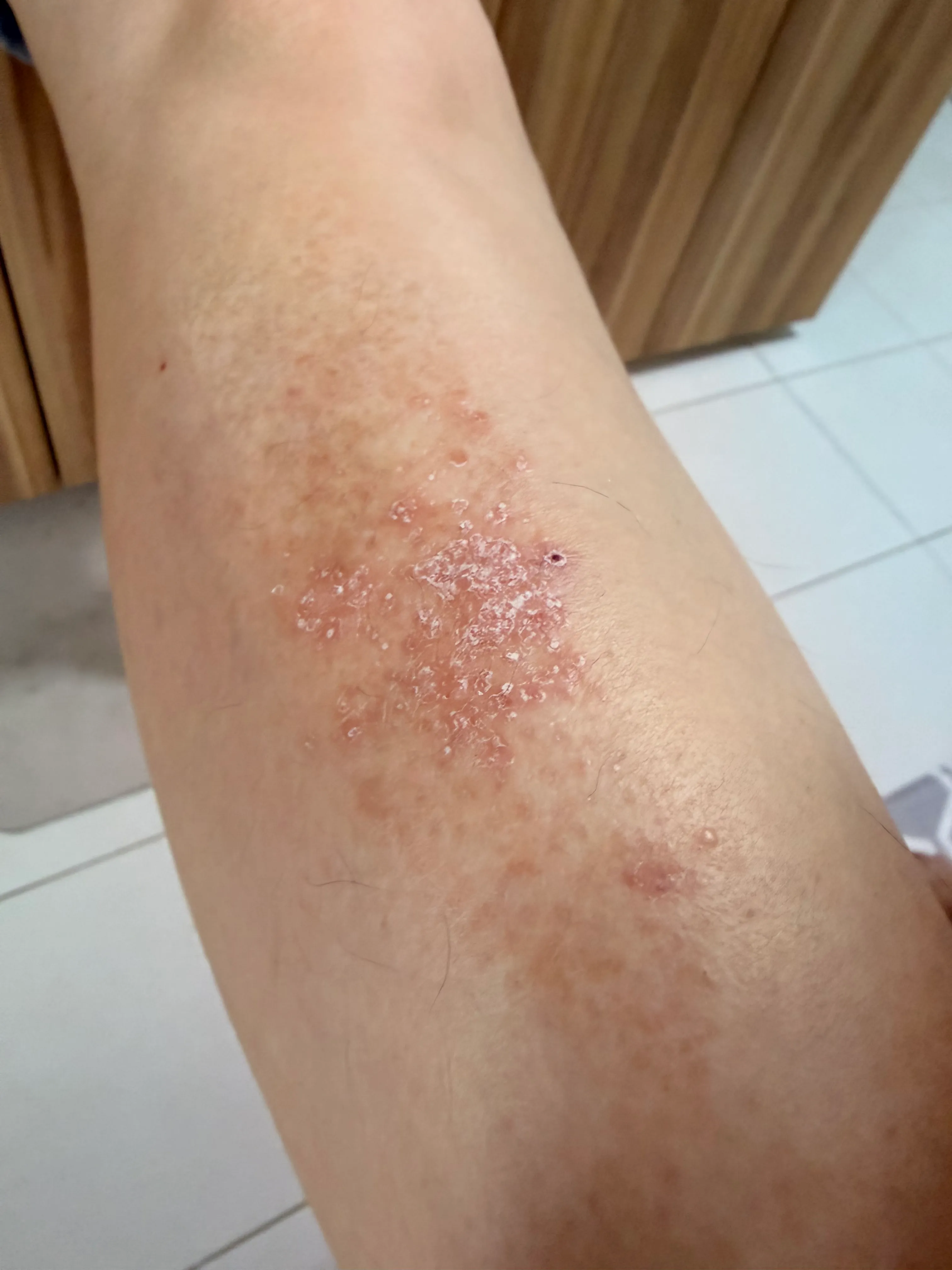
Seven nights later it was back. That’s her leg below, shared with her permission.
Northwest is not a bad corner
This is the part most people get backwards, and it matters more than the story does.
There is no such thing as a bad corner. Northwest isn’t cursed, and it isn’t a direction to avoid.
Same room. Same bed. Same week.
- Does nothing to me
- Might do nothing to you
- Went straight to her skin
Different person, different result.
Why most bedroom Feng Shui advice does nothing
Search “bedroom Feng Shui” and you’ll get rules. Your legs must not point at the door. Not at the toilet either. And not just pointing straight at them — even angled roughly that way is out. No fan hanging over the bed, or you’ll go mad.
It’s why people rearrange an entire house, follow every list they can find, and feel precisely nothing. The same flat treats each person in it differently. A corner that supports one person can quietly cost another — and neither of them will think to blame the room.
I won’t publish which corner suits whom, or how that gets worked out. That’s the work itself. But you don’t need the method to take the point: the answer is person-specific.
We didn’t fix it that week
Here’s the unglamorous part.
Our daughter was sick and she needed her mother at 3am. That’s real, and it outranks everything else. Feng Shui does not outrank a sick child.
So we did the boring thing. Watched it. Kept it under control with lotion. Waited.
Anyone who has lived with eczema knows you never really stop managing it. The lotion wasn’t a fix. It was a holding pattern, and we knew it.
Our girl is better now, so my wife is moving back to her own corner.
That — not the prediction — is the actual work. Knowing what’s happening is the easy half. The useful half is deciding what to hold, what to adjust, and how long you can carry something before it costs more than it’s worth. Sometimes the right call is to take the hit for a week because something else matters more. You can only make that trade deliberately if you know what the hit is.
The question almost nobody thinks to ask
Did your skin, your sleep or your mood change after you swapped rooms, moved house, or shifted a bed?
Almost nobody lines those two things up. The move and the symptom sit weeks apart, so they get filed as unrelated — the symptom goes down to stress, the weather, something you ate. The room never enters the picture.
It’s worth asking. Not because every symptom is a Feng Shui problem; plenty aren’t. But when it is one, no amount of managing the symptom will reach the cause.
Same corner, different person, different result.
If something at home shifted after you moved, or after someone changed rooms, that’s what a Feng Shui Audit is for — read against the people actually living in the space, rather than against a list of rules.